Leaks
Why Basements Leak at the Floor-Wall Joint
Updated · Holdfast editorial
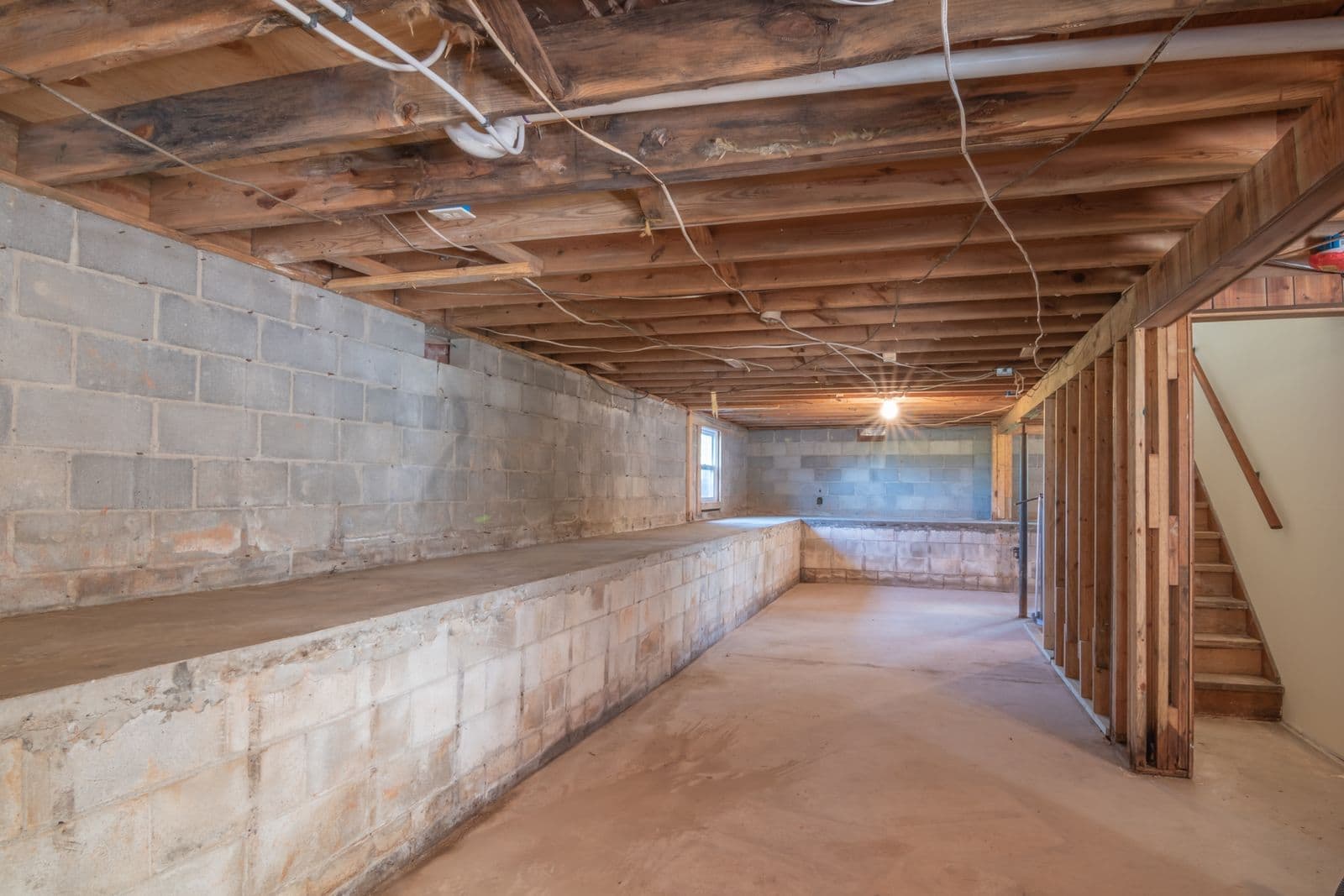
Hydrostatic pressure
Saturated clay soil holds water against the foundation. The weakest point is the joint where the floor was poured against the wall.
Why old drains fail
Clay drain tile around older homes collapses or fills with silt and roots, so water has nowhere to go.
The fix
See interior drainage systems and sump pumps.
What the inspection looks for
The contractor checks where water appears first, whether it follows rain or rises with the water table, the condition of any existing sump pit and drain tile, and the grading and downspouts outside. That distinguishes a surface-water problem, fixed outside, from groundwater pressure, which usually needs interior drainage.
Why Basements Leak at the Floor-Wall Joint: follow-up questions
Will sealing the floor-wall joint stop the water?
Rarely for long. Caulk or hydraulic cement at the joint can't hold back water under pressure; it usually finds another path.
Is water at the floor-wall joint a foundation problem?
Not by itself. It's usually a drainage and pressure problem, but it's worth checking walls for cracks or movement at the same time.
Every home differs; editorial standards.